Oc

Lorem ipsum dolor sit amet, consectetur
adipiscing elit. Etiam posuere varius
magna, ut accumsan quam pretium
vel. Duis ornare

Latest News
Follow Us
GO UP

Teacher Resources

A curated set of external resources to help you teach ocean literacy with confidence and clarity.
Year Level
Subject
Topic
Resource Type
State

268 Results Found

Sensational Seas

Seven engaging, sea-inspired activities designed to spark children’s curiosity and support hands-on, child-centred learning about the ocean.
Year LevelEarly Learning
Resource TypeLesson PlanUnit Plan
OrganisationCool.org

Shark Cull Debate

Behind the News - What seems like a spike in shark attacks has some people worried about going for a swim in the sea. It's prompted politicians and experts to get together and discuss solutions.
Year Level5-67-8
Resource TypeLesson PlanVideo
OrganisationBehind the News

Shark Harbour

The National Geographic documentary Shark Harbour follows marine biologists in Sydney Harbour as they study shark attacks to better understand and coexist with these predators.
Year LevelSecondary
OrganisationUltramarine Films

Shark Nets

Behind the News looks at the role shark nets play near some popular swimming spots however, scientists and conservationists are calling for them to be banned. We find out why shark nets are controversial and what other methods governments are looking into to keep sharks away from swimmers.
Year Level5-6
Resource TypeLesson PlanVideo
OrganisationBehind the News

Sharks and Rays of Port Phillip Bay Incursion

This incursion introduces students to the diverse fauna of Port Phillip Bay (and southern Australia), with a particular focus on chondrichthyans (cartilaginous fish). Students will explore the habitats, life cycles, functional morphology (anatomy), and evolutionary adaptations of these fascinating species. The program also covers the geological history of Port Phillip Bay and the impact of human activities on shark and ray populations.
Resource TypeEducational Provider
OrganisationPort Phillip Bay EcoCentre

Sharks in the Marine Ecosystem

Learners will identify producers, consumers and decomposers in the food chain, and understand the importance of sharks in the marine ecosystem.
Year Level3-4
Resource TypeLesson PlanWorksheet
OrganisationMarine Stewardship Council

Sharks: Primary Unit

This Australian Museum resource introduces primary students to shark biology, behaviour, habitats, and conservation through interactive activities, videos, and curriculum-linked learning tasks.
Year Level3-45-6
Resource TypeUnit PlanTeachers' Guide
OrganisationAustralian Museum

Sharks: Secondary Sharks: Secondary unit

Students explore shark anatomy, adaptations, ecology, and conservation through inquiry-based, curriculum-linked learning activities and scientific case studies.
Year LevelSecondary
Resource TypeLearning Unit
OrganisationAustralian Museum

SharkSmart school workbooks

The SharkSmart school primary and secondary workbooks use the NSW Shark Management Strategy as a real-world example to help students learn science and technology while understanding shark safety and ocean use.
Year LevelPrimarySecondary
OrganisationSharkSmart

Sound waves measure ocean temperatures

This video and activity explains how researchers use sound waves to measure ocean temperatures, a technique that helps monitor climate change and marine environments by providing accurate, real-time data on temperature changes at various depths.
Year Level9-10
Resource TypeLesson PlanVideo
OrganisationABC Education

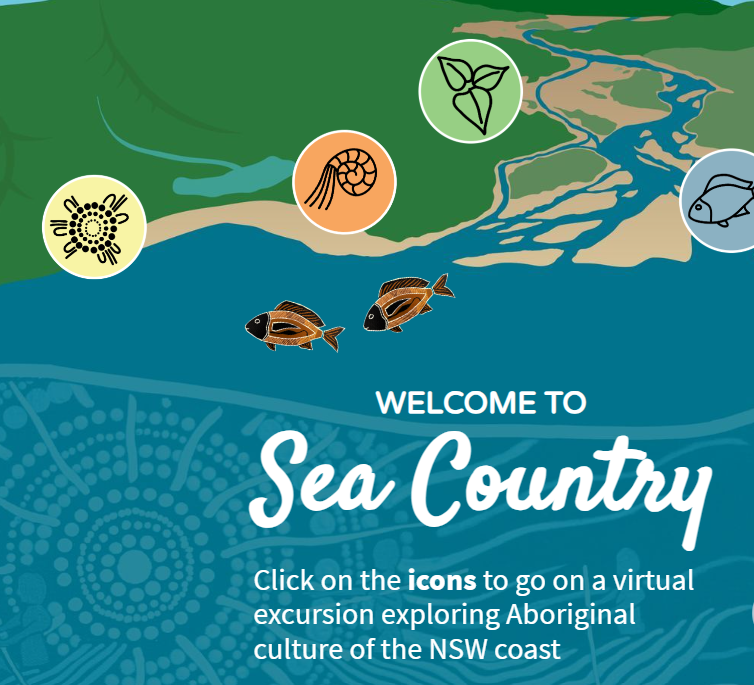
South Coast Sea Country in NSW

The “South Coast Sea Country Excursions” resource from NSW Department of Primary Industries is an educational guide for upper primary students that teaches about the cultural and environmental values of Sea Country around Batemans Bay and Jervis Bay, including Aboriginal connections, marine parks and suggested excursion activities linked to the curriculum
Year Level5-6
Resource TypeUnit PlanEducational Provider
OrganisationPeeKdesigns and NSW Department of Primary Industries

Southern Cross University SEA Program

Using a state-of-the-art marine research facility and the ecologically unique Solitary Islands as a backdrop, the National Marine Science Centre offers innovative field- and laboratory-based science activities for Primary and Secondary students. Working alongside enthusiastic scientists, students develop their scientific skills through hands-on, interactive, curriculum-based STEM activities. The SEA program is developed by our education staff to assist teachers in meeting the New South Wales Board of Studies/National Curriculum Key Learning Area outcomes.
Year LevelSecondary
Resource TypeEducational Provider
OrganisationSouthern Cross University